Coastal Market Days: A Month-by-Month Local Guide
October 30, 2026 - Local Guides


October 30, 2026 - Local Guides

October 29, 2026 - Local Guides
October 25, 2026 - Local Guides

October 23, 2026 - Sea Views
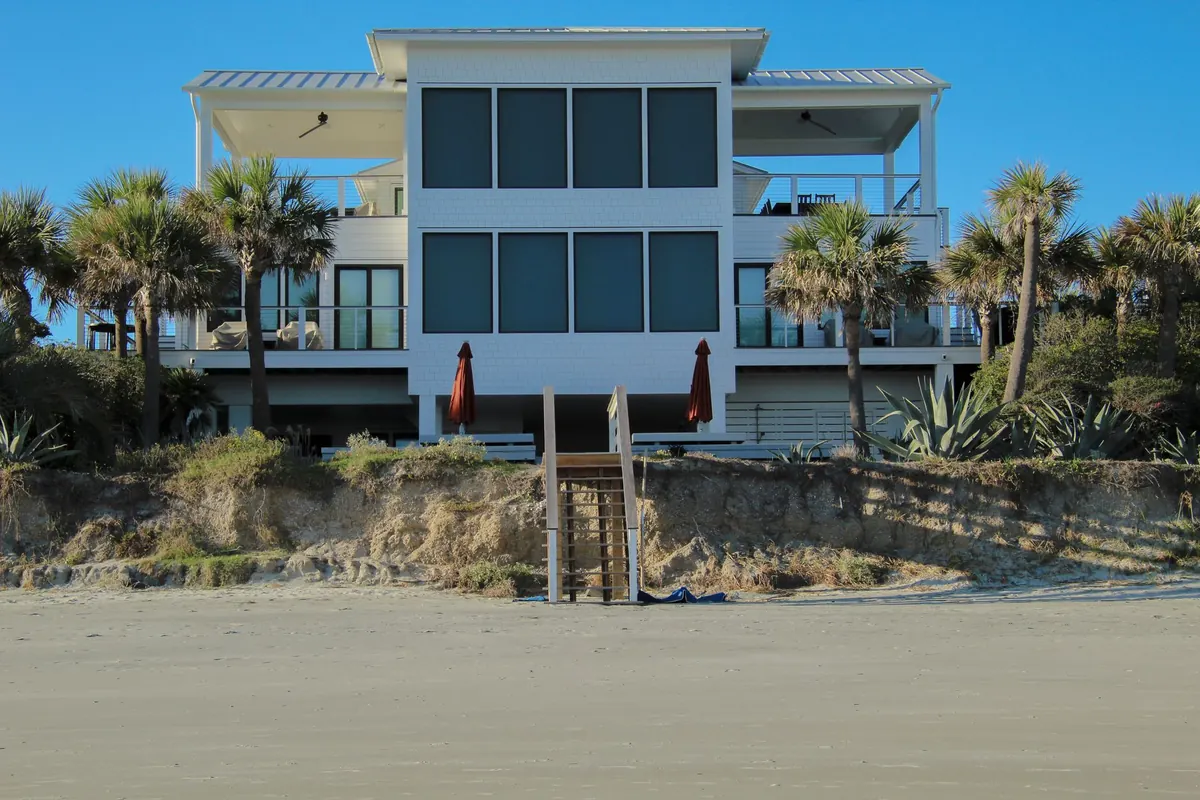
"Beachfront" is one of the most elastic words in travel. It can mean a house with sand at the gate, or a flat on a hill where you can see water if you lean out of the bathroom window. Between those two extremes sits a long list of small, unglamorous details that decide whether a coastal rental becomes the best week of your summer or a week of loading the car to find a beach somewhere else. None of these details are secret. They simply don't appear in the listing photos. Here are the five mistakes that come up again and again, and how to sidestep each one before you send a deposit.
Listing photographs are made by people who want the property to look good, which is fair enough, but it means you are looking at a sales pitch rather than a site plan. Wide-angle lenses stretch small rooms. Drones hide the motorway between the house and the sand. A long lens can compress a fifteen-minute walk into what looks like twenty steps. Photos may also be several years old, taken before the new apartment block went up next door.
The fix is to ask for views no professional photographer would choose. Request a photo taken from the balcony with the phone held level, looking left, then looking right. That pair of images tells you more than a gallery of sunsets: you see the car park, the neighbouring roof, the road, the actual line of sight to the water. Then open a satellite map and find the property pin, and check the distance to the beach with the measuring tool rather than trusting the word "steps". Ask when the photos were taken. If the answer is vague, ask for a short video filmed on a normal phone, walking from the front door to the nearest place you can swim.
Most coastal rentals are easy to look at and harder to reach. The last stretch is where holidays quietly fall apart: an unpaved track that scrapes a low car, a cliff path with sixty steps and no handrail, a parking space three streets away in August, a key box you have to find in the dark after a delayed flight. If you are travelling with young children, older relatives, heavy suitcases or someone with limited mobility, these are not minor details.
Before booking, get specific answers to specific questions:
Ask for a photo of the entrance as you will actually see it, plus the exact map location rather than the village name. On many booking platforms a pin sits at the centre of the nearest town, which can be a twenty-minute drive from the house. And whatever the listing says, plan to arrive in daylight the first time.
Two sentences worth sending every host: "Could you send a photo from the balcony looking left and right, and tell me how long the walk to the sand takes at a normal pace?"
A shore can be glorious at eleven in the morning and useless at six in the evening. On Atlantic coasts in particular, the gap between high and low water can run to several metres, which means a wide sandy bay at lunchtime can turn into a long walk across wet flats, or a narrow strip backed by rocks, by late afternoon. Elsewhere the beach in front of the house may be a rocky shelf, a pebble bank, or a stretch where the current strengthens near a river mouth.
Check a tide table for your exact dates and a tide that suits the hours you actually swim. Ask the host directly whether people swim in front of the property and where locals go instead; a five-minute drive to a sheltered cove is often the difference between daily swimming and none. Ask about lifeguard cover too, because in many places it is seasonal and stops well before the weather does. If you are unsure about conditions, currents or rocks, ask a lifeguard or a local before you go in, and don't treat a listing description as safety information. Flag systems exist for a reason.
People choose a rental for its view and then live in it for a week. A west-facing terrace is beautiful in the morning and unbearable at four in the afternoon in July. A whitewashed house on a headland can funnel wind so that the outdoor table is unusable for half the stay. Shade is the amenity guests miss most: a covered terrace with a table in the shadow of the house beats a sea view you can only enjoy through glass.
Ask which direction the main outdoor space faces, and whether the shade is permanent or a sail that gets taken down. Check that the air conditioning covers the bedrooms, not just the living room, and ask about window screens, mosquito nets and ceiling fans, especially if you are near wetlands, lagoons or a garden with irrigation. A photo of the terrace taken in the middle of the afternoon is a fair test of what the space is really like.
The nightly rate is rarely the price. Cleaning fees, linen charges, tourist tax, refundable deposits and metered utilities can add a noticeable amount, and in some hot regions electricity for air conditioning is billed separately. Check-in windows may not match your flight. Cancellation terms on coastal rentals are often stricter than hotel terms, and a small deposit sent by an untraceable method leaves you with very little to fall back on.
The neighbours matter as much as the contract. A beach bar that plays music until the early hours in August may be closed and silent in October. Roadworks, a building site next door or a festival on the sand can change a stay completely, and hosts do not always volunteer the information. Read reviews from the past twelve months with the newest first and look for complaints that repeat, rather than one-offs. Then ask plainly: "Is there any construction, roadwork or event near the property during our dates?" Get the total price and the answer in writing before you pay, and if the terms look unusual, take advice before sending money.
Run through this list with the listing open in front of you. It takes less time than choosing a restaurant, and it prevents most of the disappointments above.
Do that, and the word "beachfront" stops being a hopeful adjective and becomes something you can actually plan a week around.
Photo: Karen F / Pexels
A month-by-month tour of coastal markets — what each season puts on the stalls, when to arrive, and which nearby...
Winter strips coastal towns back to bakeries, ferries and empty headlands. A practical guide to what closes, when,...
October 30, 2026 - Local Guides
October 29, 2026 - Local Guides
October 25, 2026 - Local Guides
Copyright © 2026 Faro Viva. All Right Reserved.