Coastal Market Days: A Month-by-Month Local Guide
October 30, 2026 - Local Guides

October 30, 2026 - Local Guides
October 29, 2026 - Local Guides
October 25, 2026 - Local Guides
October 23, 2026 - Sea Views
In August, the harbour front is a wall of sunburn and menus printed in four languages. In February, it is a man mending a net, a dog asleep under a bench, and a bakery that opens at half past six because that is when the boats come in. Nothing feels missing. The town has simply been edited down to what it needs to survive — and the leftovers are usually the good parts.
The complication is that every coastal town keeps a different winter shape. One closes in October and stays dark until Easter. Another, twenty minutes down the road, has a school, a pharmacy and a ferry that runs all year, and is quietly alive. Knowing which one you are walking into is the difference between a superb week and three days of shuttered windows.
There is no national closing day, and tourist office websites rarely admit how patchy things get. Closures roll through a coast in three rough stages, and the middle one catches people out.
Beach bars, lidos, sunbed concessions, boat-trip kiosks and the big seasonal hotels go first. The economics are simple: a business that needs forty staff in July cannot pay forty staff in November. Some owners use the quiet weeks for repairs; others simply lock the shutters and leave. Promenades that were standing-room-only in summer become very good places to walk.
This is the one that surprises visitors who came over Christmas and assumed the atmosphere would hold. Once the holidays are over, family-run restaurants and small hotels often take their own break — a week, a month, sometimes longer — before reopening for spring. A town that felt cheerful on 2 January can be genuinely still by 20 January. If you are planning a midwinter trip, this is the fortnight to check hardest.
Look for the signs of a place that lives on more than summer: a working fishing harbour, a hospital, a secondary school, a year-round ferry link, a factory or a ferry terminal for a larger island. These towns keep a greengrocer, a butcher, a pharmacy, a hardware shop and at least one café where nobody minds if you sit for an hour with a coffee. They are rarely the prettiest towns on the coast, and that is precisely why they work in winter.
Island and peninsula communities do not shut down; the timetable just contracts. Expect fewer crossings, an earlier last sailing, smaller vessels, and some routes switching to foot passengers only when the car deck is not worth the fuel. Winter weather adds delays and the occasional cancelled sailing, especially on exposed crossings.
Three habits make this manageable. First, check the operator's own timetable rather than a booking aggregator, because schedules often change in early January and again in spring. Second, always look at the return sailing before you commit to a day trip — a 5pm last boat becomes a 3pm last boat in winter, and missing it is expensive. Third, if you are staying on an island, ask your accommodation what happens when a sailing is cancelled, and whether they keep a room free for stranded passengers. Many small guesthouses do, quietly, and it is worth knowing before the wind picks up.
Strip away the seasonal layer and you find the machinery of a real town, much of it happy to see you:
Off-season coastal travel is not a consolation prize. It is a different sport, and some of it is better than the summer version.
Coastal footpaths are at their best when the gorse is not hiding the view and you can hear the sea rather than a playlist. Birdwatchers get the estuaries and lagoons to themselves during migration, when waders and wildfowl crowd the mudflats. Storm-watching — from a safe distance, behind a harbour wall or a café window — is a genuine winter pleasure on Atlantic coasts. Rock pools, tide tables and a pair of boots will occupy children for hours when the beach bars are shut.
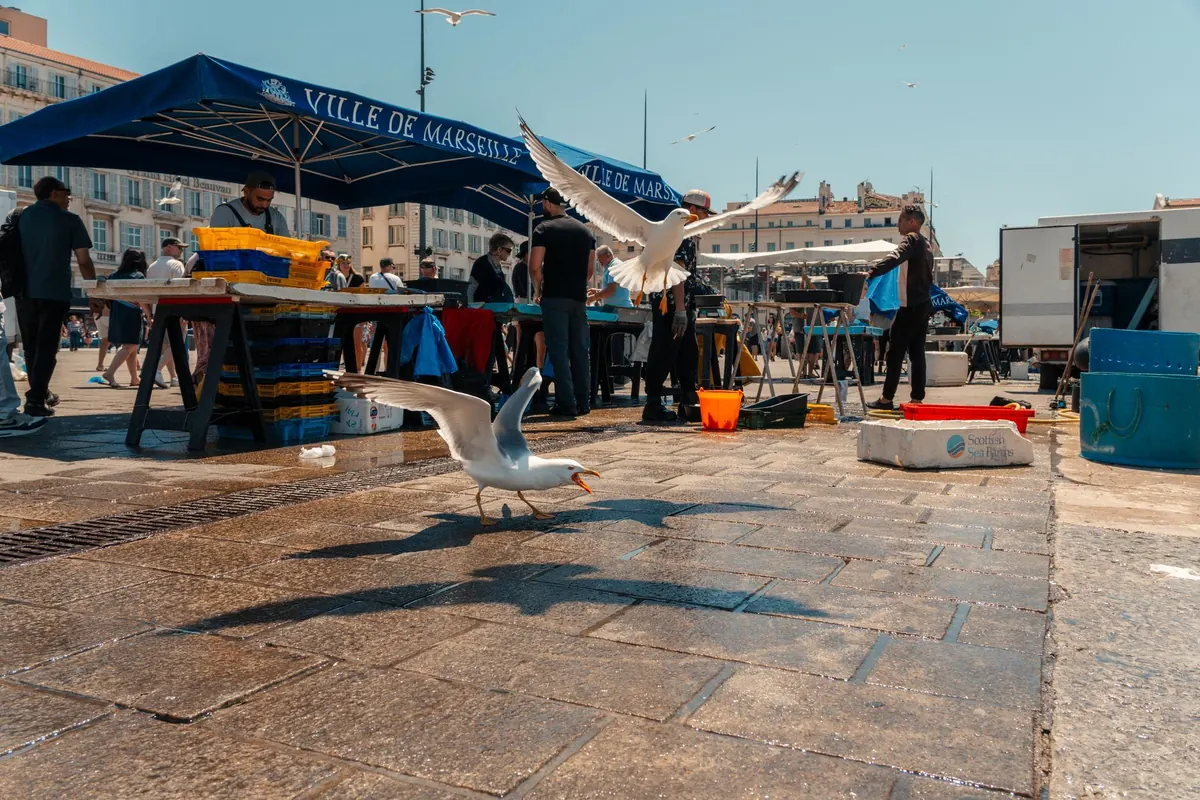
Then there is the working side of the coast. Fishing harbours are livelier at dawn in winter than in August, when everyone is looking the other way. Markets move indoors and sell what is actually in season: citrus, greens, roots, cheese, cured fish. And in the far north, the aurora season and the long blue dusk are the entire point of going.
Websites lie by omission. A page that says "open daily" in July is often untouched until May. Work in this order:
Choose a town with a reason to exist in January, not just a beach. Book accommodation you can reach on foot from the ferry or the one bus that still runs. Plan one indoor anchor per day — a museum, a long lunch, a church — and leave the rest to the weather. Eat where the lights are on and the menu is short. Wear more layers than you think, and carry a torch for the walk back from dinner. If a place you wanted to visit is closed, take it as information rather than disappointment: the town is telling you what it is. The bakery will still be open at half past six.
Photo: Marri Shyam / Pexels
A month-by-month tour of coastal markets — what each season puts on the stalls, when to arrive, and which nearby...
A relaxed three-day coastal plan balancing a lighthouse headland, a long beach afternoon and a ferry trip, with...
October 30, 2026 - Local Guides
October 29, 2026 - Local Guides
October 25, 2026 - Local Guides
Copyright © 2026 Faro Viva. All Right Reserved.